From a messy workflow
to a production system.





Observe before building.
Process documents are useful, but they rarely contain every handoff, exception, shortcut, or judgment call. Applied Crew follows real examples with the people doing the job, examining the trigger, the owners, the systems, the written and unwritten rules, the delay, the rework, and the outcome leadership cares about.
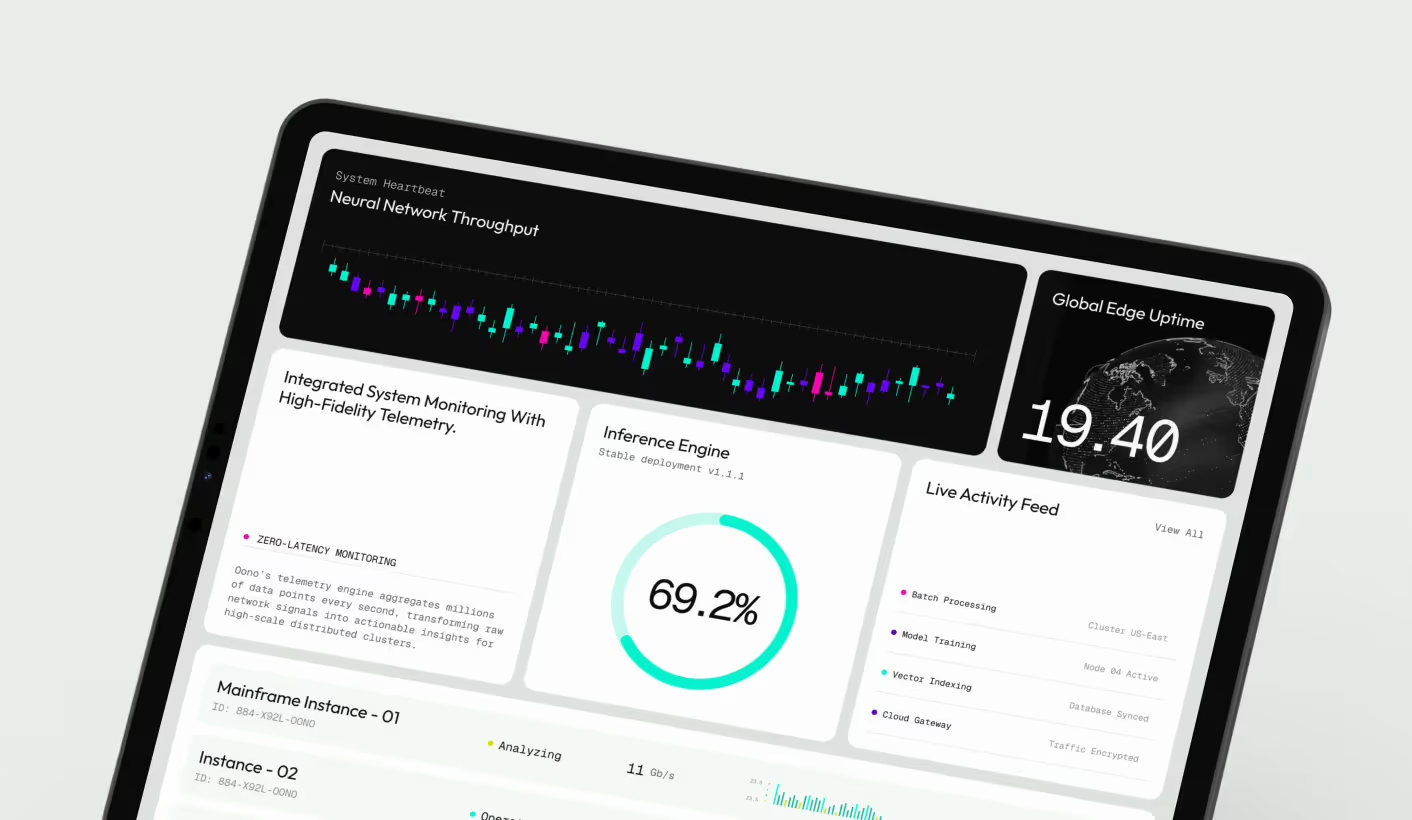
Build against real work.

Connections
Read and write access to required systems, using the least privilege that can support the workflow.

Context
Documents, records, examples, rules, and prior decisions prepared for reliable retrieval.

Human controls
Review queues, approvals, edit paths, thresholds, and clear ownership for exceptions.

Workflow logic
The sequence of actions, branches, retries, timeouts, fallbacks, and escalation paths.

Model choices
AI where interpretation is valuable; deterministic code where a rule can be explicit.

Evaluation
A repeatable test for task quality, completeness, policy adherence, and difficult cases.

Launch under observation.
The deployment is built with representative inputs from your environment. Applied Crew connects the required systems, encodes the known rules, and creates a test set that includes ordinary work as well as the difficult cases that break a demo.


What we stop rebuilding each time
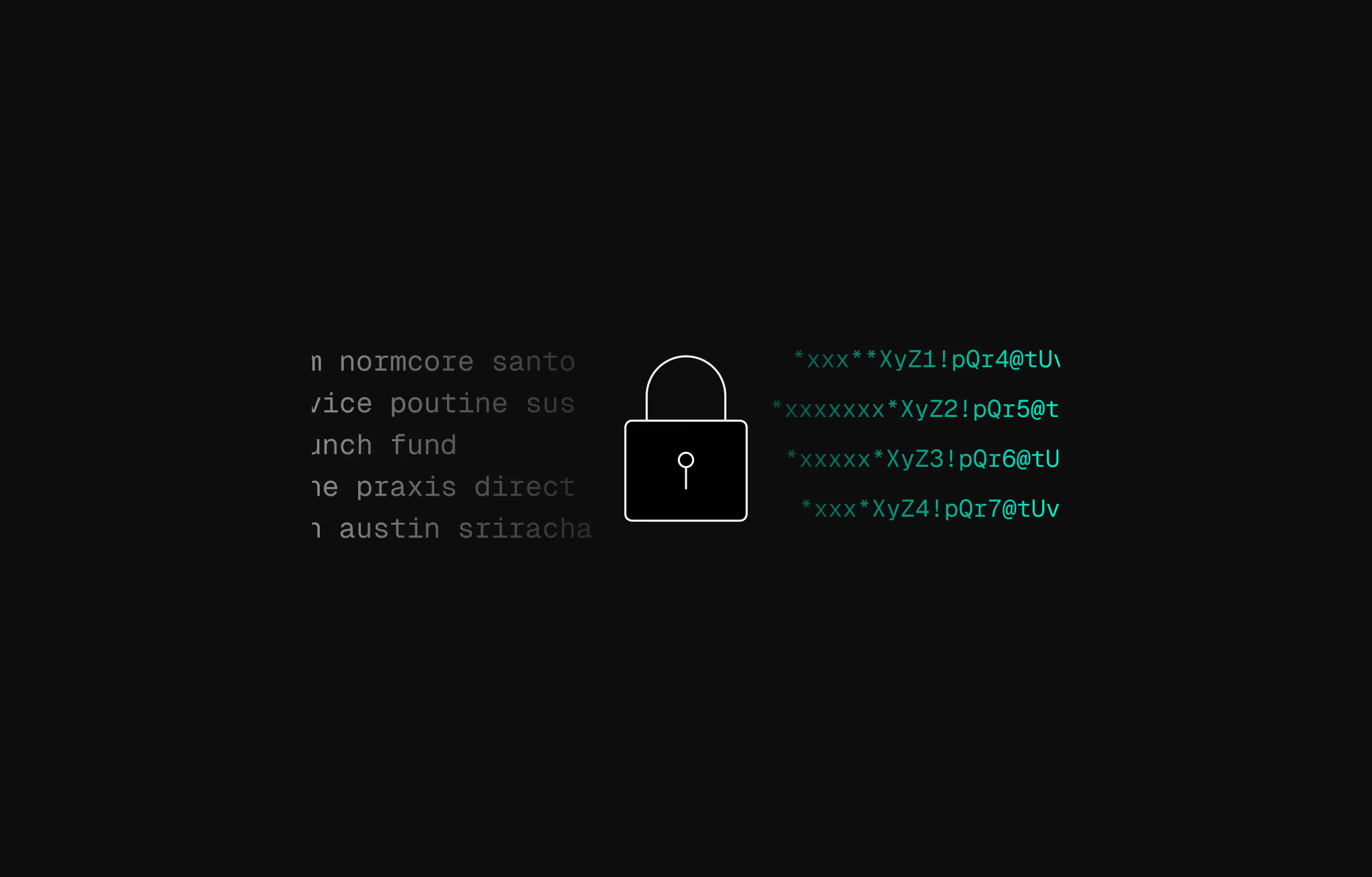
Credentials, scopes, and tenant boundaries stay explicit, so a connector built for one customer shortens the next deployment.
2
3
4
5
6
7
8
9
10
11
12
13
14
15
16

Access, controls, evaluation, launch, monitoring, and the outcome record.
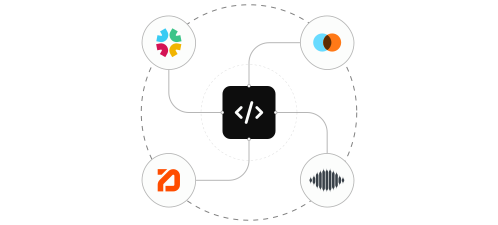
Rules, examples, and records with source references.
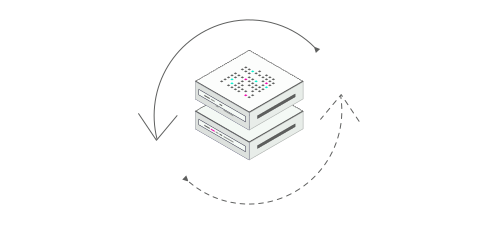
Test sets that reflect your task, not a benchmark.
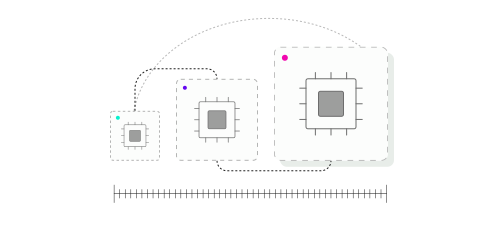
Failures, retries, corrections, cost, and outcome.
The measure comes before the build.
A useful first deployment has a number both teams agree to watch. It may be cycle time, response time, conversion, throughput, error rate, or cost per item. Activity alone is not treated as a result.
The workflow should outlast a model release.
Applied Crew is not tied to a single model provider. We select models according to the task, data policy, latency, cost, quality, and customer preference. Where conventional software is enough, we use it.

Customers should understand which models are used, what data they receive, and how a model change is evaluated before it reaches production.
Frequently Asked Questions
Usually, no. Applied Crew is designed to work around the systems that already hold customer, candidate, operational, and financial context. A replacement is recommended only when an existing system makes the required result impractical.
Applied Crew is model-neutral. We choose models and tools based on the job, the customer's constraints, and the required level of control. The architecture should not depend on a model name when it does not need to.
Applied Crew remains involved. We monitor the system, review errors and operator corrections, update rules and evaluations, and report against the agreed outcome. The operating arrangement is defined in the engagement scope.
Pricing is based on the workflow, integration work, risk, usage, and the level of ongoing operation Applied Crew owns. It is scoped after the workflow study rather than sold as a generic seat plan.
Show us one workflow.
A useful first conversation does not require an AI roadmap. Bring the process, the systems, the pain, and the measure leadership cares about. We will tell you what we would study first.